

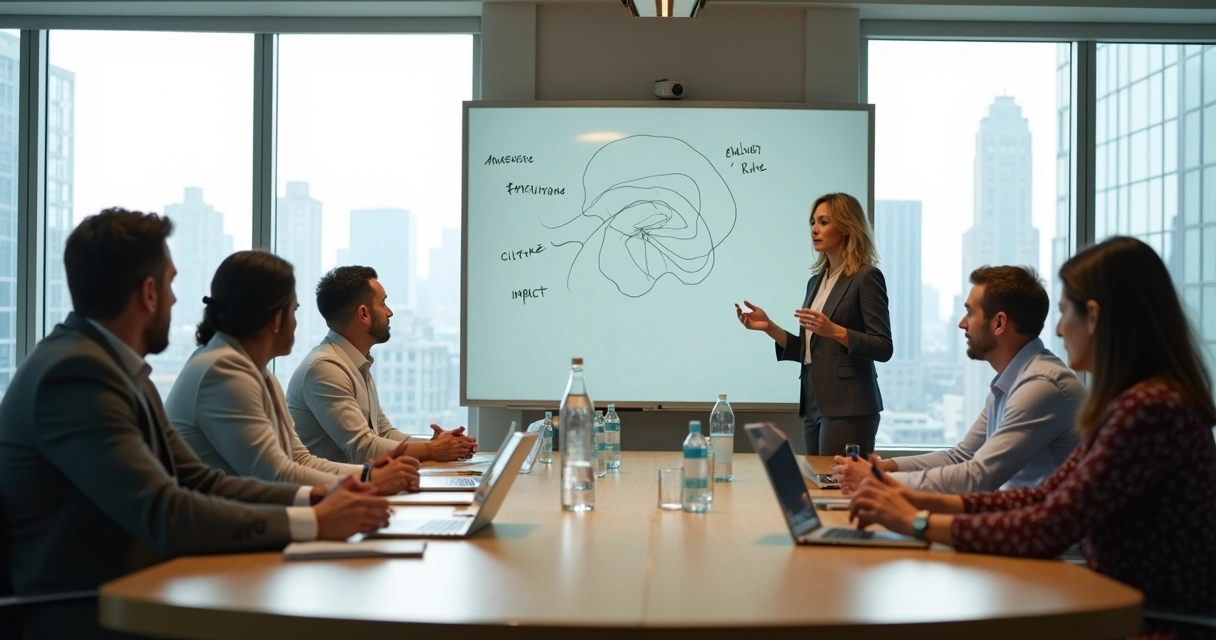
Change is not just about adopting new processes or tools. When we talk about conscious transformation, we are talking about a shift in how people relate to themselves, to others, and to their work. This transformation requires deeper self-reflection, emotional openness, and the willingness to grow together. Yet, even the most enthusiastic teams can unconsciously push back against this journey. We have seen it often. Resistance is subtle at first. If we know what to look for, we can respond before it grows and creates division or stagnation.
Spotting resistance early matters
It is never easy to watch our team hit a wall, especially when that wall is almost invisible. Early signs of resistance are not outright conflict or loud refusals. Instead, they are mostly soft behaviors, unsaid words, or even sudden silences. From our experience, these signs are often overlooked until momentum is lost.
When awareness grows, resistance hides in plain sight.
Below, we offer seven of the subtle signals that reveal when a team is struggling to embrace true conscious transformation.
1. Surface agreement but little action
Many teams nod along during meetings about transformation. But when it comes to real change, behaviors remain exactly as before. We saw this play out with a client team: after a workshop on emotional maturity, the group quickly agreed on new practices, only for routines to snap back to old patterns within a week. This is not active sabotage—it's passive resistance wrapped in politeness.
Surface agreement comes through when:
- Team members say "yes" but never volunteer for new responsibilities.
- There is no follow-up after discussions on conscious growth.
- Ideas are praised, yet implementation stalls.
We believe that until the "talk" matches the "walk," transformation remains stuck at the door.
2. Rationalizing emotions away
One early warning comes when teams rationalize or intellectualize every challenge. Rather than noticing how emotions are influencing decisions, people explain discomfort as "not relevant" or "just business."
If we cannot feel it, we cannot change it.
This looks like:
- Turning every emotional issue into a technical problem to solve.
- Detaching from uncomfortable feelings rather than facing them.
- Asking for facts only and dismissing "subjective" experiences.
The cost? Integration never happens, and unspoken tensions linger.

3. Resistance to vulnerability
Conscious transformation always asks for some degree of vulnerability—from sharing uncertainty to admitting mistakes. This can feel threatening to the ego. In our work, teams that avoid vulnerability may:
- Shy away from honest feedback sessions.
- Default to formal, impersonal conversations.
- Joke or change the subject when emotions surface.
Without a shared willingness to be vulnerable, collective growth quickly stalls.
4. Blaming or externalizing setbacks
Another sign is a growing pattern of blaming others or circumstances for lack of progress. Instead of reflecting on internal patterns, energy shifts outward.
- Delays are blamed on “other teams,” “the market,” or “timing.”
- Individuals defend their actions instead of asking how they contribute to the situation.
- The phrase "if only they would change, we could move forward" becomes common.
Growth needs ownership, not just explanations.
Recognizing this blame pattern early helps bring the focus back to what can be shaped from within.
5. Selective participation or silence
Sometimes resistance is silent. Team meetings get quieter, with a few voices dominating and others withdrawing. Important topics are skipped. Side conversations bloom outside the main discussion. In one project, we watched a team stop raising real concerns—but openly discuss their frustration after the meeting ended. When participation shrinks, collective intelligence disappears.
Early silence points to:
- People "checking out" mentally or emotionally from meetings.
- Unspoken fears about how their input will be received.
- A sense that “what I say won’t matter here.”

6. Clinging to outdated identities
Transformation asks teams to reconsider how they see themselves. When old roles or routines define our comfort, we may unconsciously guard them. Signs of this can include:
- Statements like “that’s not how we do things here.”
- Reliance on tradition over new insights.
- Resistance to changing team rituals, structures, or language.
If identity is tied to the past, the present has no room to renew itself.
7. Fatigue and subtle pushback
Sometimes resistance does not sound like “No.” It sounds like “I’m too busy,” “Let’s take this slow,” or “Let’s revisit later.” While some caution is wise, continual delays and fatigue can cloak a deep unsettlement with the transformation process itself.
- Requests for endless clarification without acting on what’s already clear.
- Meetings that end with questions, never decisions.
- A growing sense that change is “just another project” rather than an internal journey.
Small delays add up to lost momentum.
If teams stall repeatedly, it is usually a sign of inner resistance, not just scheduling conflicts.
Why caring about these signs matters
When conscious transformation is a goal, these signs are not failures—they are signposts on the path. Ignoring them lets resistance sink invisible roots. Naming and addressing them, though, opens the space for true dialogue and fresh relational patterns. Our experience has shown that once even one sign is acknowledged and met with honesty, the path becomes lighter for everyone involved.
Conclusion: Early awareness, better outcomes
We have witnessed that detecting the early signals of resistance shapes the entire course of team transformation. By giving attention to surface agreement, rationalizations, avoidance of vulnerability, outward blaming, selective participation, clinging to old ways, and fatigue, we empower ourselves as leaders and colleagues to support meaningful, lasting change. These signs are not obstacles, but invitations—to greater honesty, deeper presence, and real growth together.
Frequently asked questions
What is conscious transformation in teams?
Conscious transformation in teams means a shared journey towards greater self-awareness, emotional integration, and responsible action within the group. It is not only about strategy changes but also about shifting internal mindsets, how emotions are handled, and how people relate at work. This process brings deeper clarity and more balanced decisions as the team's internal maturity grows.
How to spot team resistance early?
To spot team resistance early, pay attention to subtle signs like passive agreement, lack of follow-through, emotional detachment, avoidance of vulnerability, blaming others, shrinking participation, and repeated delays. These behaviors, often quiet or polite, are the first indicators that the team is pulling away from real transformation. Observing changes in group dynamics and honest feedback cycles helps reveal resistance before it grows large.
What causes teams to resist change?
Teams often resist change when they feel threatened by uncertainty, loss of identity, fear of vulnerability, or discomfort with emotional openness. Other causes include previous negative experiences with change, lack of trust in leadership, or fatigue from constant new initiatives. Resistance, at its root, often comes from a desire to protect individual or collective comfort zones.
Is conscious transformation worth the effort?
Yes, conscious transformation is worth the effort because it leads to healthier communication, improved relationships, and more sustainable performance. While the process can initially feel uncomfortable, the outcomes—such as greater trust, resilience, and authentic leadership—make the growth meaningful and lasting for the whole team.
How can leaders reduce team resistance?
Leaders can reduce team resistance by modeling vulnerability, encouraging honest dialogue, addressing fears directly, and creating safe environments for emotional expression. Supporting training in self-regulation, holding clear and compassionate boundaries, and praising openness over perfection all help to gently soften resistance and foster true transformation.