

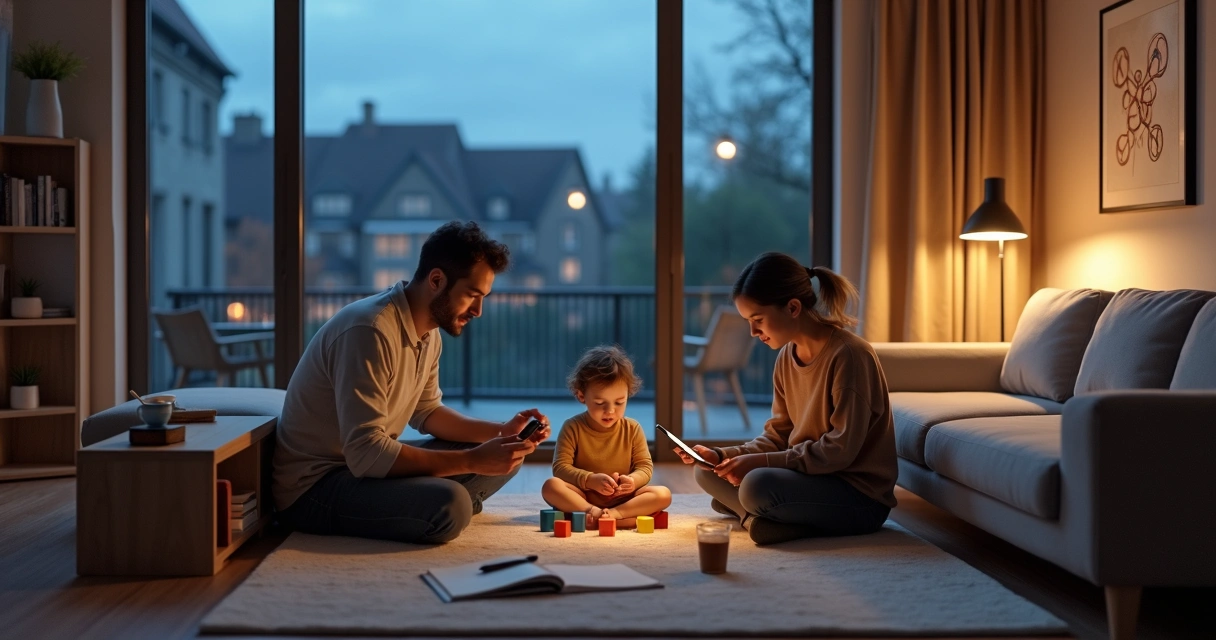
In 2026, parenting is being judged less by control and more by presence. We see this shift in daily life. A parent can set rules, provide food, and keep a schedule, yet still create fear at home. Another parent may face the same stress, but bring steadiness, respect, and truth into the room. The difference is ethical presence.
Ethical presence means showing up with conscience, self-control, and respect, even when family life feels hard.
We think this idea matters because children do not only learn from what we teach. They learn from what we sustain in our tone, timing, limits, and reactions. Home is their first social world. If that world is ruled by humiliation, threats, or emotional absence, the child adapts to instability. If it is guided by fairness and calm authority, the child adapts to safety.
A short scene makes this clear. A child spills juice during breakfast. One adult snaps, insults, and turns a small mistake into shame. Another adult pauses, hands over a towel, and says, “Clean it with me.” Same event. Different inner state. Different impact.
Children absorb atmosphere before advice.
Why ethical presence matters more now
In our view, home in 2026 is under pressure. Parents are carrying digital overload, financial worry, divided attention, and emotional fatigue. Because of this, many homes risk becoming reactive spaces. We do not say this to blame parents. We say it because awareness helps change.
The need for nonviolent and conscious parenting is not abstract. UNICEF data on violent discipline reports that about 1.6 billion children aged 1 to 14 experience violent discipline worldwide, and nearly 400 million children under 5 face regular psychological or physical punishment at home. These numbers force us to face a hard truth. Harm often happens in ordinary family settings, not only in extreme cases.
That is why ethical presence changes parental roles. It moves the role away from command and toward regulated guidance. It asks parents to become interpreters of emotion, protectors of dignity, and models of repair.
- It replaces fear-based obedience with trust-based limits.
- It teaches that authority and kindness can exist together.
- It helps children separate correction from rejection.
When we live this way, the parental role becomes more mature. Not softer in a weak sense, but steadier in a human sense.
How parental roles are changing at home
Many families no longer accept the old picture of one parent as enforcer and the other as emotional buffer. That split often creates confusion. In 2026, we are seeing a stronger call for shared moral presence inside the home.
Parental roles become healthier when both adults are responsible for safety, boundaries, listening, and repair.
This does not mean each parent acts in the same style. It means both hold the same ethical ground. One may be more verbal. The other may be quieter. One may organize routines better. The other may read emotional shifts faster. But both need to support a climate of dignity.
We have seen that children quickly notice contradictions. If one parent teaches respect while the other uses mockery, the child receives mixed messages. If one says sorry after overreacting and the other never admits fault, the child learns that power excuses behavior. Ethical presence brings coherence.

What ethical presence looks like in daily practice
Ethical presence is not a theory we mention once and forget. It appears in repeated actions. We notice it in the small moments that shape memory.
Parents who practice it tend to do a few things with consistency:
- They correct behavior without attacking identity.
- They set limits without threats they do not mean.
- They admit mistakes and repair after rupture.
- They listen for emotion beneath behavior.
- They protect the child from adult emotional dumping.
There is also a firm side to this. Ethical presence is not permissiveness. A parent can say no, interrupt harmful behavior, remove privileges, and hold structure. The difference lies in how this is done. Humiliation may produce silence, but silence is not the same as inner growth.
We also think parents need to watch their invisible habits. Eye-rolling. Sarcasm. Public exposure. Cold withdrawal. These may seem small, yet they shape a child’s sense of worth. Presence is ethical when our conduct matches the values we claim to hold.
What the research is showing
Recent evidence supports what many families feel in practice. A 2026 University of Cape Town report on parenting programmes across eight African countries found physical abuse fell by 65% and emotional abuse by 59%. Positive parenting rose by 52%, while poor supervision dropped by 48%. We read these results as proof that grounded parental presence can be taught, supported, and lived at scale.
Another sign comes from children’s long-term emotional protection. A U.S. longitudinal study on Positive Childhood Experiences found that higher counts of positive experiences helped buffer the impact of early adversity on later emotional and behavioral problems. Presence matters over time. One stable home pattern can soften future pain.
We also see support in cognitive and social outcomes. A 2026 German study of 5,644 children found that positive parenting styles were linked with higher IQ, self-esteem, self-control, altruism, and school performance, along with fewer emotional and behavioral problems. This reminds us that warmth and consistency are not decorative traits. They shape development.
How we parent becomes how children organize themselves.
What gets in the way
Most parents do not wake up wanting to be harsh, distant, or unfair. Usually, the barrier is unprocessed stress. A father who grew up under ridicule may repeat ridicule when he feels powerless. A mother who was ignored may swing between overcontrol and collapse. Family life often activates old pain.
This is why we believe ethical presence begins with self-observation. Before asking, “Why is my child acting like this?” we may need to ask, “What state am I bringing into this room?” That question can interrupt repetition.
Children need regulated adults more than perfect adults.
Some helpful anchors at home include:
- Pausing before responding during conflict.
- Keeping rules clear and few, not endless and vague.
- Using private correction more than public exposure.
- Creating short daily rituals of connection.
These actions are simple, but not always easy. Still, they build moral texture in the home.

Conclusion
Ethical presence is shaping parental roles at home in 2026 by changing what we expect from authority. We are moving away from the idea that parenting is mainly control, and toward the understanding that parenting is a moral and emotional practice. At home, presence is never neutral. It either calms or agitates. It either dignifies or diminishes.
When parents act with honesty, restraint, fairness, and repair, children grow inside a safer inner structure. They learn that conflict can happen without contempt, that limits can exist without fear, and that love can stay present during correction. That is how ethical presence shapes the home. Quietly. Repeatedly. Deeply.
Frequently asked questions
What is ethical presence at home?
Ethical presence at home is the habit of relating to family members with respect, honesty, emotional control, and fair limits. It means our actions, tone, and decisions reflect care and conscience, not only authority.
How does ethical presence affect parenting?
It helps parenting become more stable and less reactive. Parents correct with dignity, listen better, and create safety during conflict. Children then learn trust, self-control, and emotional security more easily.
How to build ethical presence at home?
We can build it by pausing before reacting, speaking without humiliation, keeping clear limits, apologizing after mistakes, and making time for daily connection. Small repeated actions shape the home climate.
Is ethical presence important for parents?
Yes. It helps parents lead without causing avoidable emotional harm. It also gives children a model of mature behavior, which supports healthier relationships, better self-worth, and more balanced development.
What are examples of ethical presence?
Examples include kneeling to speak calmly to a child, correcting behavior in private, saying sorry after shouting, keeping promises, setting bedtime limits without threats, and staying respectful during disagreement with another parent.