
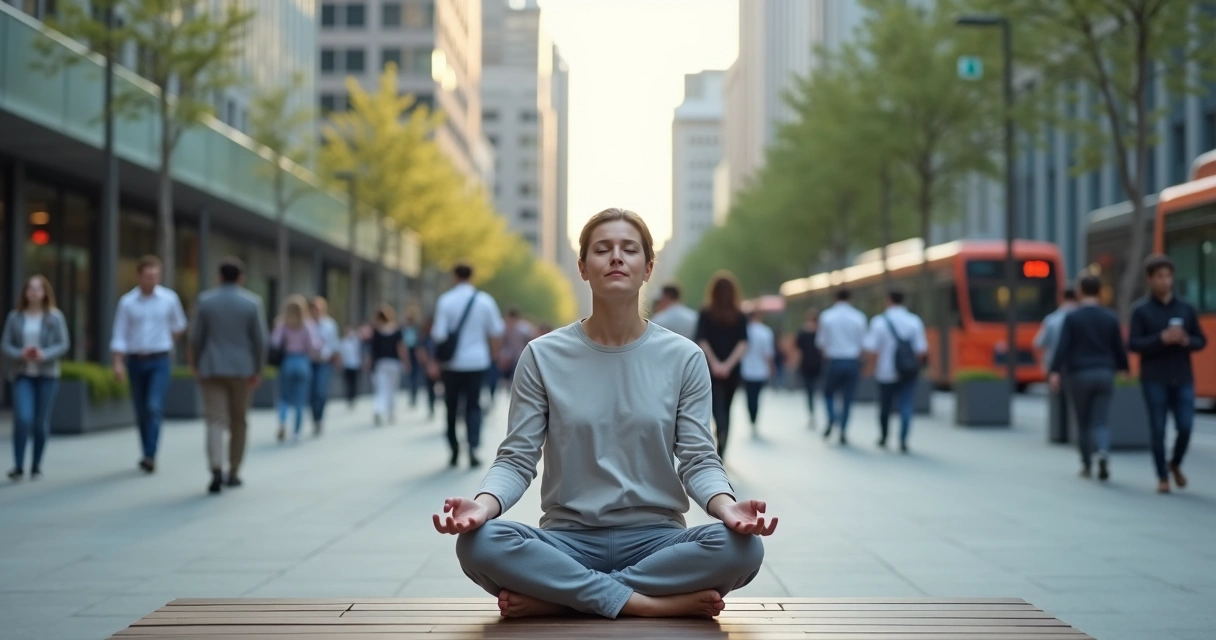
In today’s crowded spaces, whether we’re facing work meetings, navigating public transport, or participating in community events, stress can take many shapes. Sometimes it’s a racing heart before speaking up, a sense of pressure while being observed, or discomfort when surrounded by many people. We have found that these experiences are not just about the environment but are strongly linked to our inner state. The way we respond to public stress is a reflection of our here-and-now consciousness.
Understanding public stress and its roots
Public stress is more than feeling nervous in front of others. It arises from the clash between our internal landscape and external demands. Many of us have noticed that the same public event can leave one person calm and another deeply anxious. What shifts this balance? Our research and practice show that it is not simply technique, but the internal maturity and resourcefulness we bring to the situation.
Public stress is often a signal pointing to unintegrated emotional tension waiting to be addressed.When we only try to control the symptoms, such as shaking hands or a pounding heartbeat, we miss the invitation to deepen our presence.
What makes Marquesian meditation unique?
We see meditation as far more than a method for relaxation. In our framework, meditation becomes a conscious turning-inward, a way to engage with emotions, thoughts, and body sensations in a direct and compassionate way. Unlike approaches that encourage escape or numbing, Marquesian meditation moves us to embrace everything experienced, transforming it through awareness and integration.

Our method rests on five pillars, but when focusing on public stress, we encourage three practical techniques:
- Grounding through the body’s senses
- Integration of emotional patterns
- Stabilization of presence
Technique 1: Grounding through body awareness
When tension rises in public, the most accessible anchor is the body itself. Our nervous system calms when we direct attention to physical sensations, such as the contact of our feet with the ground, the movement of the breath, or the gentle touch of clothing. This grounds us in the here and now.
Here’s a simple grounding exercise we practice:
- Stand or sit with both feet flat.
- Notice the sensation where your body touches the surface beneath it.
- On an in-breath, mentally note: “I am here.” On the out-breath, “I am present.”
- Let your shoulders drop, jaw unclench, and bring curiosity to any tension you notice.
- Allow two minutes for this. If possible, keep your eyes soft, neither focused nor shut tight.
We have observed that this technique is subtle but powerful. By rooting in the physical, we often find the emotional flow settles naturally. If anxious thoughts try to take over, we gently guide attention back to sensation without forcing anything away.
Technique 2: Integrating emotional patterns
Many times, the stress we feel in public spaces echoes long-standing emotional patterns. Maybe it’s the fear of judgment, the urge to withdraw, or the habit of people-pleasing. Rather than push these feelings down, we encourage meeting them with honesty and compassion.
This technique involves becoming a quiet observer of our internal experience, rather than getting swept up by it.
- When discomfort appears, pause and locate it physically if you can (chest, stomach, etc.).
- Describe what you feel: Is it pressure, heat, tightness?
- Ask yourself gently, “What does this part of me need right now?”
- If a memory or belief surfaces (“I’ll be embarrassed,” “I’m not enough”), acknowledge it. Don’t judge it as bad or wrong.
- Breathe into this spot for a minute, allowing the emotion to exist, but not letting it take over your attention completely.
Allowing is sometimes the fastest path to relief.
In our experience, this approach transforms emotional energy into insight or acceptance, rather than fueling more anxiety.
Technique 3: Stabilizing presence in interactions
Often, public stress spikes during direct interaction—speaking, presenting, or being the center of attention. Presence, in our view, is not about always feeling confident but about being steady within.
Stabilizing presence means staying connected with ourselves even as we engage with others, so that we act from our center, not our fear.
- Before interacting, place a hand over your heart or stomach briefly as a private signal of support to yourself.
- Remind yourself: “This is one moment, not the whole story.”
- Allow pauses in conversation; do not rush to fill space. Silence can be your ally.
- When you feel tension, notice it and come back to your breath rather than reacting impulsively.
- Afterward, reflect kindly on the experience. What did you notice? What changed, if anything?
With practice, we find that interactions become less about performance and more about dialogue. The internal atmosphere steadies, and responses become clearer.
Applying techniques in real public scenarios
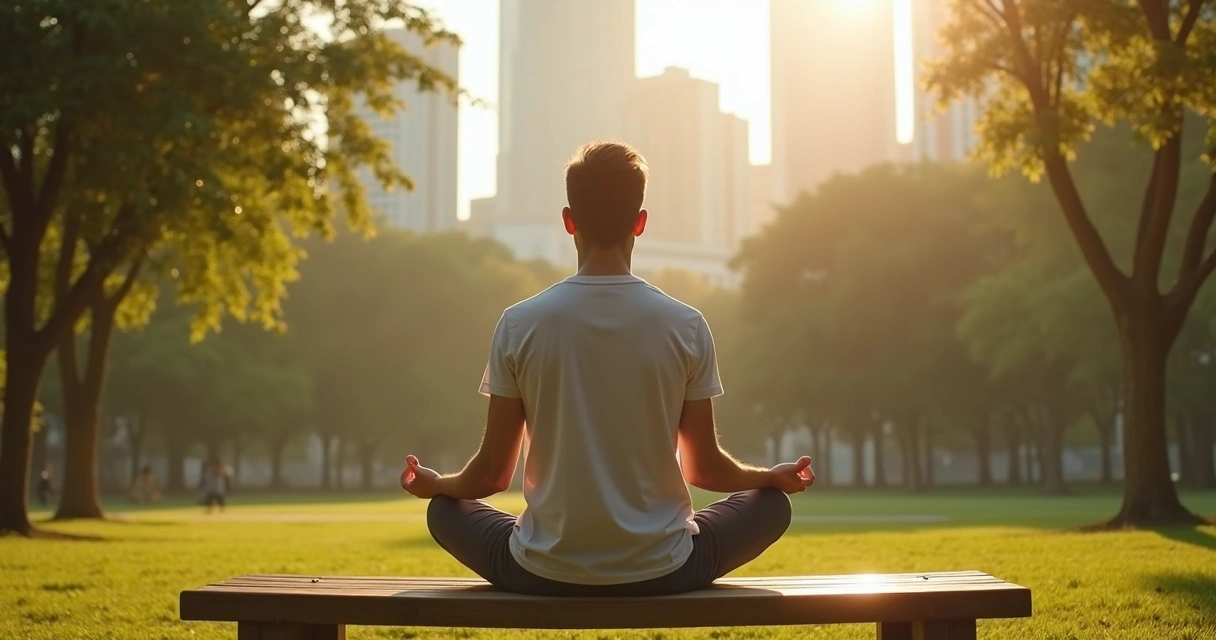
Maybe you are preparing to speak at a meeting, take public transport, or meet new people. How do these practices look when put into action?
- Pause before stepping in: Take a breath and ground yourself. Remind yourself, “I can stay present through this.”
- Notice signals as they arise: Tight chest? Racing thoughts? Instead of bracing, bring friendly attention to those sensations.
- Guide your attention: If you lose focus, return gently to something stable—your feet, your breath, or a calming visual detail around you.
- Reflect afterward: What went well? What did you learn about your patterns? Celebrate small changes or the courage to try something new.
Bit by bit, these micro-practices help us develop a more mature response to stress, not by erasing emotion, but by relating to it differently.
Why emotional maturity changes public stress
We have seen that stress in public spaces often stems from old emotional wounds. By consistently applying meditation techniques, we move from reacting to responding—from chaotic defense to considerate action.
When awareness grows, new responses become possible.
We notice more choices open to us, even when facing difficult crowds or high-pressure situations. The emotional charge loses its power, and what once seemed overwhelming now feels manageable, even within the same external conditions.
Building a sustainable practice
Consistency is key. Even if you only practice for a few minutes each day, results gather over time. If your schedule is full, it is enough to link meditation with something you already do: before leaving home, during a break, right after a meeting.
A story we hear often is this: At first, someone wouldn’t notice stress until it was all-consuming. After weeks of gentle practice, they begin to recognize early signals, adjust more quickly, and recover faster. The preference is always for self-kindness—don’t force, just return again and again to attention.
Conclusion
Marquesian meditation techniques offer a path to relate to public stress with more clarity and confidence. By grounding in the body, integrating old emotional patterns, and stabilizing presence, we see not just temporary relief, but deep changes in how life is experienced in public situations.
We believe the best results come from regular, sincere practice, joined by curiosity rather than self-criticism. The rewards are subtle but real: a steady presence, more open interactions, and a balanced response to the many demands of public life.
Frequently asked questions
What is Marquesian meditation technique?
Marquesian meditation is a set of practices that help us become more present, emotionally integrated, and conscious in daily life, especially in public situations. These techniques focus on grounding in the body, meeting emotions with awareness, and developing steady presence in real-time moments.
How does it help with public stress?
It helps by teaching us to respond from inner stability rather than old habits of fear or avoidance. By practicing body grounding, emotional integration, and presence, we shift from reacting to managing stress with calm and clarity when facing public challenges.
Where can I learn Marquesian meditation?
You can begin by practicing the described techniques on your own. Consider looking for workshops, guided sessions, or resources from trusted practitioners who specialize in Marquesian principles. Group practice can also help deepen understanding and consistency.
Is Marquesian meditation effective for anxiety?
Many people find that Marquesian meditation reduces anxiety, especially when practiced regularly and with patience. It works by changing our relationship to anxious thoughts and body sensations, providing tools to process rather than suppress feelings.
How often should I practice these techniques?
Ideally, practice a few minutes daily, but even brief sessions before or after a public event make a difference. The consistency matters more than duration. Over time, meditation can become an accessible resource during any stressful situation.