


Schools teach more than subjects. They teach people how to be with other people. In our view, that lesson often shapes the whole climate of a classroom. A student may forget a worksheet. They rarely forget how an adult spoke to them in a tense moment.
Relational awareness in schools means noticing how our words, tone, timing, and responses affect others.
We see this as a daily practice, not a special event. It grows in ordinary moments, such as greetings at the door, group work, conflict after recess, and staff conversations in the hallway. When those moments are handled with care, students feel safer, and learning has more room to happen.
Current school practice shows both progress and gaps. According to recent school mental health findings on social-emotional learning, 63% of U.S. public schools report having a formal social-emotional skills curriculum. Yet training is uneven, with teachers more often prepared than non-teaching staff. That matters, because students relate to everyone in the building, not only to classroom teachers.
Start with the climate, not the program
We think schools sometimes look for a fast method when the real need is a shared way of relating. A strong worksheet cannot repair a weak culture. Relational awareness grows when adults model steadiness, respect, and clear limits across the whole school day.
Students read the room before they read the lesson.
Research supports a whole-school path. A meta-analysis of whole-school interventions across 45 studies found small but real gains in social-emotional adjustment, behavior, and internal distress. The gains were not dramatic, and academic scores did not rise in the same clear way. We think that sober finding helps schools set honest goals. Better relationships matter because they change the human experience of school.
Eleven practices that build relational awareness
Below are 11 practices we find useful. They are simple, but not shallow. Each one asks adults and students to become more aware of what they carry into an interaction.
-
Open the day with human contact. A greeting at the door, eye contact, and using a student’s name can shift the mood of a room. We have seen quiet students soften when they are noticed before they are instructed.
-
Teach emotional naming in plain language. Students need words for inner states. “I am frustrated.” “I feel left out.” “I am nervous.” When we name a feeling, we lower the chance that it comes out as blame, silence, or disruption.
-
Use brief pauses before correction. Not every behavior should be met at full speed. A two-second pause helps adults respond with intention. It also shows students that correction can be calm, not harsh.
-
Set norms for listening, not just speaking. Many classrooms teach turn-taking, but fewer teach how to listen without planning a comeback. We can model this by paraphrasing, asking one clarifying question, and waiting before judgment.
-
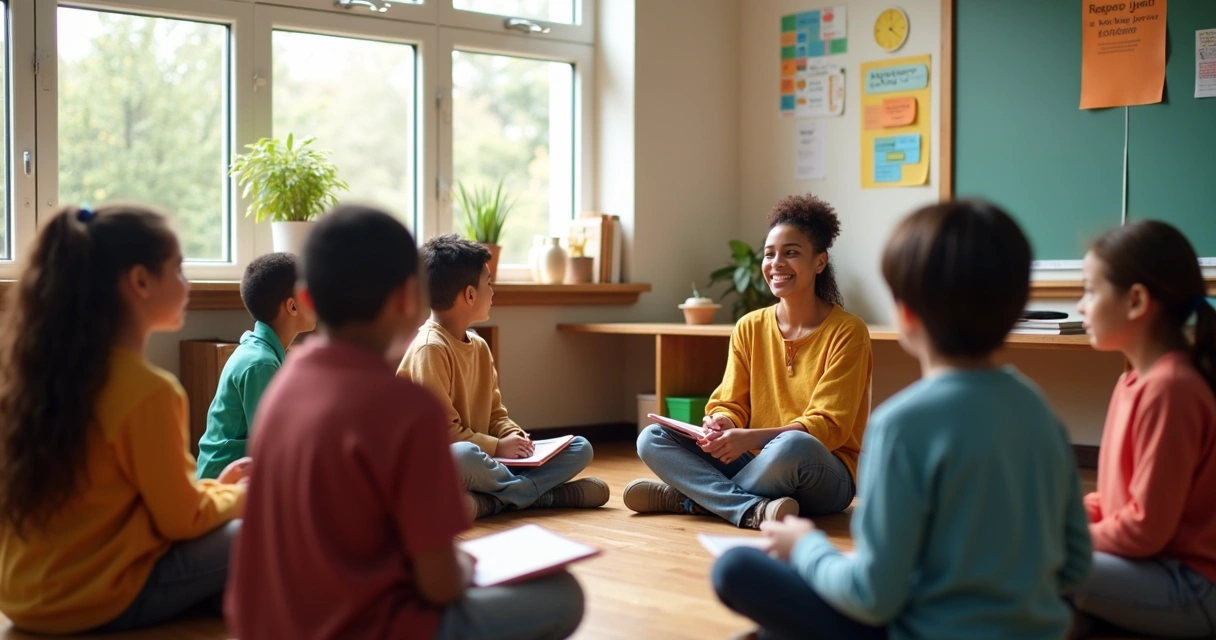
Build structured partner and group reflection. After projects or discussions, ask students what helped the group work well, what shut people down, and what they would change next time. Reflection turns social moments into learning moments.
-
Repair after tension. A class can move on too fast after harm. We believe repair is one of the clearest signs of maturity. A short conversation, apology, reset plan, or check-in can keep one bad moment from becoming a lasting wound.
-
Include all adults in the relational culture. Students meet office staff, bus staff, aides, cafeteria workers, and coaches. If care and boundaries change from one space to another, confusion grows. Shared training and shared language help the school feel coherent.
-
Create routines for peer support. Buddy systems, peer welcome roles, and mixed-age mentoring can reduce isolation. We have noticed that students often respond well when support is offered by someone close to their own age.
-
Normalize reflection after conflict. Instead of asking only “Who started it?” we can ask, “What was happening in you just before this?” That question shifts attention from accusation to awareness. It is a harder question. It is also a better one.
-
Protect transitions. Hallway changes, lunch, arrival, dismissal, and the first minutes after breaks often carry stress. Simple rituals help, such as breathing, silence for thirty seconds, or a written check-in. Many conflicts begin when no one marks the shift from one state to another.
-
Give adults space to regulate, too. A dysregulated adult cannot create a settled room for long. Staff need time for reflection, support, and honest conversation. We think this is often neglected, even though students feel adult strain very quickly.
What these practices look like in real life
Imagine a middle school classroom after lunch. Two students enter arguing. The teacher does not ignore it, and does not shame them in front of everyone. First comes a steady greeting. Then a short settling task for the class. Later, the teacher meets both students for five minutes, helps them name what happened, and guides a small repair. Nothing dramatic. Yet the room changes.
Relational awareness grows when schools respond to tension with steadiness instead of force.
That kind of response does not make school soft. It makes school clear. Boundaries still matter. Consequences still matter. What changes is the emotional quality of the interaction.

Common barriers schools face
We know schools carry pressure from many directions. Time is short. Staff are tired. Some students arrive with heavy emotional loads. In that setting, relational work can feel like one more task. But we think it works better when treated as part of teaching, not as an extra layer added on top.
Adults may not share a common language for behavior and repair.
Non-teaching staff may be left out of training.
Discipline systems may reward speed over understanding.
Reflection may happen only after major incidents, not daily.
These barriers are real. Still, small shifts can start anywhere. One team can change meeting norms. One teacher can improve transitions. One principal can ask staff how students feel in different spaces of the building.
Conclusion
Nurturing relational awareness in schools is less about adding a new slogan and more about changing daily contact. We believe schools become healthier when people learn to notice impact, regulate emotion, and repair strain before it hardens into disconnection. The eleven practices above are simple enough to begin now, yet deep enough to reshape culture over time.
Small moments teach. Repeated moments form trust. And trust changes what a school feels like from the inside.
Frequently asked questions
What is relational awareness in schools?
Relational awareness in schools is the ability to notice how behavior, tone, emotion, and communication affect other people in the school community. It includes self-awareness, empathy, respectful boundaries, and the skill of repairing tension when it happens.
How to nurture relational awareness daily?
We can nurture it daily through greetings, emotional check-ins, listening routines, calm correction, reflection after group work, and repair conversations after conflict. Short, repeated practices tend to shape culture more than occasional special activities.
Why is relational awareness important for students?
It helps students feel seen, safe, and better able to manage feelings and relationships. When students understand their own reactions and the impact they have on others, they are more likely to handle conflict, ask for help, and participate with trust.
What are examples of relational practices?
Examples include door greetings, circle discussions, partner reflection, peer mentoring, shared listening rules, transition rituals, restorative conversations, and class norms that teach both speaking and listening. These practices turn everyday interactions into chances for growth.
How can teachers promote relational awareness?
Teachers can promote it by modeling calm responses, naming emotions without judgment, setting clear expectations, inviting reflection, and repairing strained moments directly. Students learn relational awareness best when adults practice it in front of them.