


Every family or household carries a subtle rhythm. Sometimes, that rhythm is harmonious. Other times, it feels more like a jumble. We often find ourselves wondering how we can feel more steady inside, and how we can teach those around us to do the same. In our experience, the integration of emotion and thought does not happen through grand gestures but through simple, repeated rituals. These rituals build connection to ourselves and to each other, shaping homes where understanding and clarity blossom.
The invisible link between rituals, emotion, and thought
We see in our daily work that people tend to forget how closely emotion and thought interact. Most of our reactions—big or small—grow out of emotions. If those emotions are given space, listened to, and gently woven with thought, our choices shift. Where chaos reigned, order appears.
A growing body of research supports this. Studies show that both secular and religious rituals increase positive affect and decrease negative affect. This means, in everyday life, that regular rituals help make us happier and less overwhelmed. They also strengthen that sense of “we” that makes a home feel safe.
Small daily habits can change the climate of a household.
What stands out is not complexity, but consistency. It doesn’t take fancy actions to create deep change. What matters is returning, again and again, to simple ways of inviting our emotions and thoughts to meet.
Why simple rituals work at home
To really integrate emotion and thought, rituals at home must be easy, repeatable, and meaningful. This isn’t about routines that happen on autopilot, but about those we do with attention. Researchers have found a strong link between family ritual communication and a sense of belonging, cohesion, satisfaction, and well‑being. These effects are especially powerful for teenagers, but benefit people of all ages.
We believe rituals work because:
- They create a known “container”—a special time and space—where emotions can surface without chaos or judgment.
- Repetition makes it easier for everyone to relax and participate fully.
- They support both individual reflection and shared discussion, making it possible for everyone to be heard.
These kinds of rituals help us slow down, notice what we feel, name it, and connect it to what we believe or want. This supports clearer thinking and healthier choices, day after day.
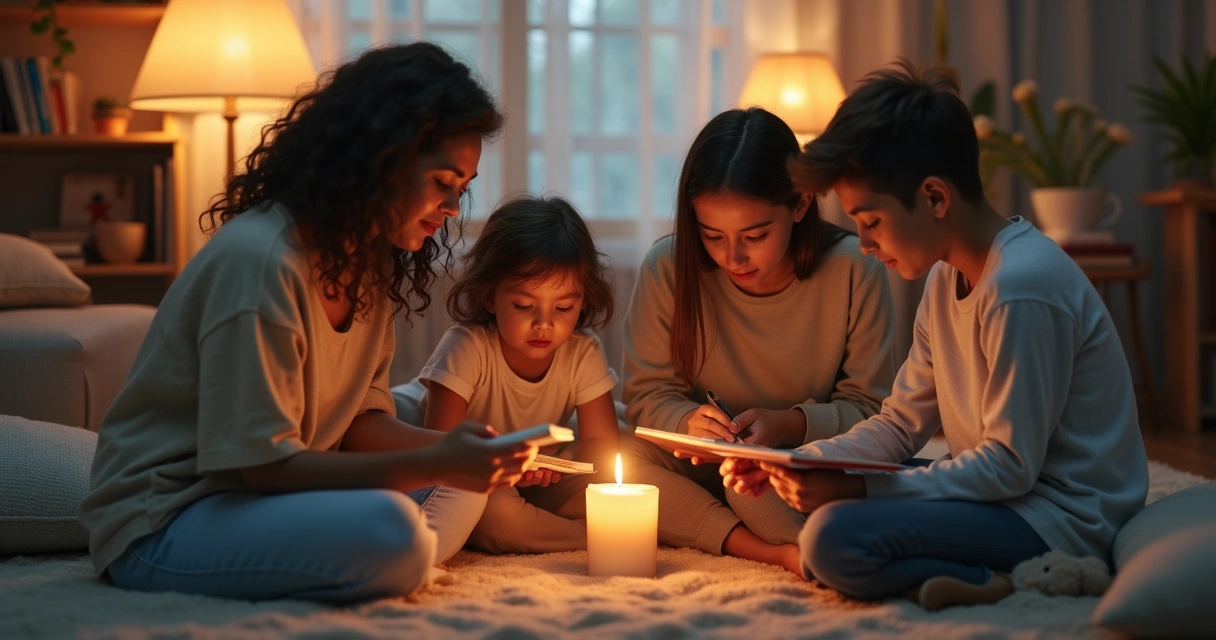
Examples of simple rituals for integrating emotion and thought
Here, we want to share some rituals we’ve seen work well. None require special equipment; all invite deeper listening. Feel free to adapt them for your own home and loved ones.
1. Three breaths, three words
Before dinner or at bedtime, everyone sits quietly and takes three deep breaths together. Afterward, each person shares three words that capture how they feel in the moment. No discussion is required—just listening.
This tiny act makes it normal to pause and notice feelings, while also linking them to language and thought.
2. The feeling circle
Once a week, gather in a circle (the dinner table works, or even the living room floor). One by one, everyone shares one thing that brought up a strong feeling during the week. After each share, others reflect back—not advice, just what they heard.
This builds presence and encourages empathy, making it easier to bond and understand each other.
3. The gratitude and challenge jar
Keep a jar or bowl in a central spot. Throughout the week, family members add notes describing something that made them feel grateful and something that was a challenge. At the end of the week, read the notes together.
Much research supports this: Time invested in rituals is linked to increased positive feelings and stronger social bonds. Gratitude, especially, shifts our brain’s focus from stress to connection.
4. Lights out, thoughts in
Right before switching off the lights for bed, invite everyone present to voice one thought that stood out during the day, and how it made them feel. This gentle bridge into sleep connects the thinking mind with the heart.
5. Personal grounding moments
Not every ritual needs to be shared, nor does every home have multiple people. For individuals, we recommend a short “grounding” ritual. Stand or sit quietly, place a hand on the chest, breathe, and ask, “What am I feeling? What am I telling myself about this?” Writing down the answer helps thoughts and emotions connect.
Truth grows where emotion and thought walk together.
Rituals and the growth of emotional maturity
Simple rituals do even more than steady the feelings of the day—they help us and our loved ones grow in emotional maturity. When a person learns, over time, to notice and name emotions, something inside shifts. Unspoken chaos turns into quiet understanding. Families practicing these rituals together not only boost their day-to-day peace, but are also laying the groundwork for balanced decisions and fairer relationships in the future.
A study found that the meaning we give to rituals shapes family cohesion and emotional safety. When rituals are skipped or done just for show, they lose their power. But when we do them with real intent, even the simplest action matters.
It is through meaningful repetition—showing up for these practices again and again—that we build skills for emotion regulation, self-reflection, and mature communication.

The ripple effect: From the inside out
Families shape people, and people shape the wider world. Our experience suggests that there is no healthy relationship without first tending to our own balance. Rituals at home do not just calm stormy days—they set patterns that ripple outward. Emotional maturity grows with each act of honest sharing, reflective listening, and conscious pause.
If you live alone, know this: personal rituals can be just as powerful as shared ones. What counts is turning toward ourselves with curiosity and kindness, not away.
Creating daily or weekly rituals touches not only our feelings, but also how we think, decide, and guide those we care for. Done over weeks and months, these small acts change lives.
Conclusion
Simple rituals are not just nice habits. They are a method for harmonizing emotion and thought, creating order from the inside out. We have seen the deepest changes come from ordinary, honest actions repeated with care. By pausing together, sharing words, or quietly checking in with ourselves, families and individuals move steadily toward more connection, understanding, and maturity.
Household rituals do more than fill time; they write the ongoing story of who we are and who we can become.
Frequently asked questions
What are simple rituals for emotions?
Simple rituals for emotions are small, repeatable actions that help us notice, express, and connect what we feel with what we think. Examples include sharing three words that describe how you feel, keeping a gratitude jar, or taking deep breaths together. The key is to create a safe, regular space for emotions to emerge and link to thoughts in everyday life.
How do rituals help with thinking?
Rituals support clear thinking by slowing us down and creating time to notice feelings before reacting. When we match emotion with words or gently reflect on experiences, our responses become less impulsive and more reasoned. Over time, this habit strengthens decision-making and self-understanding.
Can kids use these rituals at home?
Yes, children can benefit from these rituals at home. Short, easy activities—like drawing feelings, saying gratitude out loud, or joining a feeling circle—are effective for kids. Research shows that family rituals improve well-being and social bonds for people of all ages, especially for young people as they develop emotionally.
How often should I do these rituals?
The best results come from regular practice. Some rituals fit naturally into daily routines, such as before meals or at bedtime, while others (like the feeling circle) work well once a week. Consistency matters more than frequency, so choose a pace that feels natural and sustainable for your household.
What is the best time for rituals?
There is no single best time; the optimal moment is when everyone can be present and attentive. Many people find mealtimes, bedtimes, or quiet moments in the evening work well. The key is to pick a time that you can return to again and again, so rituals become a part of daily life and contribute to emotional and mental harmony.